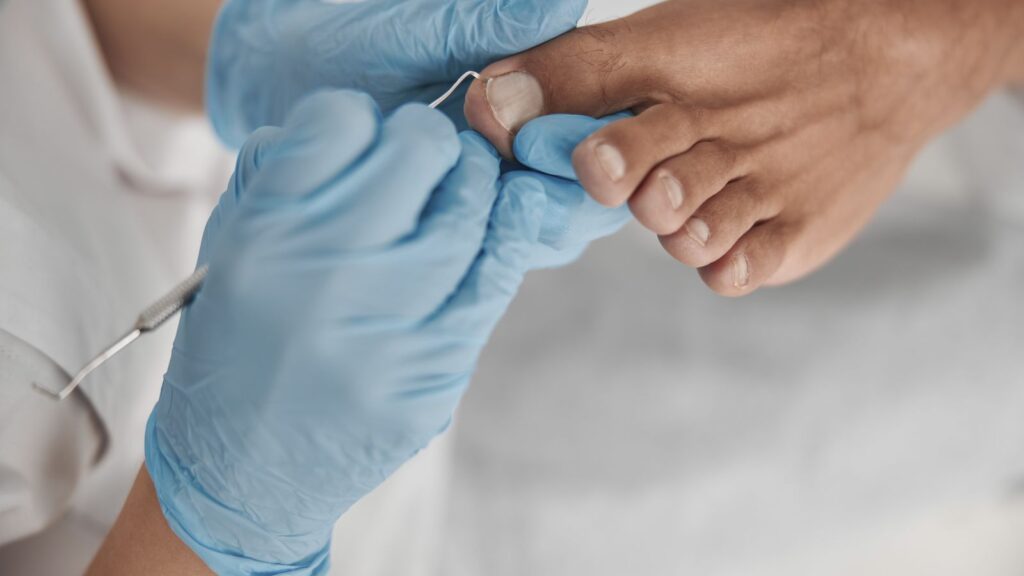
Back-of-the-heel pain from Achilles tendonitis lingers because the tendon is worn down by repeated stress. It takes that stress again every time you walk, climb stairs, or push off. Most Achilles tendonitis treatment doesn’t involve surgery. The American Academy of Orthopaedic Surgeons (AAOS) says nonsurgical care provides acceptable pain relief in most cases. Foot Center of the RGV treats Achilles tendonitis with a conservative-first plan. Dr. Quach, a former professional soccer player, sees patients at the practice’s McAllen and Weslaco offices.
Achilles tendonitis shows up in everyday adults as well as athletes. The Achilles is the largest tendon in the body and connects the calf muscles to the heel bone. AAOS notes that you use it to walk, climb stairs, and stand on tiptoe, as well as to run and jump.
Where Does Achilles Tendonitis Hurt?
Achilles tendonitis hurts along the back of the lower leg and heel, either in the middle of the tendon or where it attaches to the heel bone. AAOS calls these two types noninsertional and insertional. They can happen separately or at the same time. Knowing which type you have matters because the right treatment can differ between them.
| Noninsertional Achilles tendonitis | Insertional Achilles tendonitis | |
|---|---|---|
| Where it hurts | The middle of the tendon, above where it attaches to the heel | The lower tendon, where it attaches to the heel bone |
| Who it affects most | Younger, active people, especially runners | People at any activity level, though still most common in runners |
| What happens to the tendon | Fibers break down and develop tiny tears, with swelling and thickening | Often driven by calf tightness; bone spurs often form on the back of the heel |
| Shoes and orthotics | Shoe changes are one of the AAOS treatment mainstays for both types | Shoe changes help here too; often relieved by certain shoes, orthotics, and heel lifts |
Table source: AAOS OrthoInfo patient guidance, “Achilles Tendinitis.” The table compares the two types as AAOS describes them and gives no rates.
You may also hear the terms tendinosis or tendinopathy. AAOS says tendinitis, tendinosis, and tendinopathy essentially refer to the same problem, with tendinopathy describing microscopic wear in the tendon from damage built up over time.
Why Does Achilles Tendonitis Pain Linger?
Achilles tendonitis pain lingers because it usually comes from repetitive stress rather than one injury. Recovery is slow even with good care. MedlinePlus, the National Library of Medicine’s health site, says it can take a while for the pain to go away.
Several common triggers keep the tendon under strain. AAOS points to doing too much too quickly, such as adding a few miles to a daily run without giving the body time to adjust. AAOS also lists a change in shoes, tight calf muscles, and Haglund’s deformity, an enlarged bump of bone on the back of the heel that rubs the tendon. MedlinePlus adds running on hard surfaces such as concrete, jumping a lot, and shoes without proper support. Flat feet put more tension on the tendon, too, according to MedlinePlus.
Returning to the same routine too soon can restart the cycle. MedlinePlus notes that symptoms may return if you don’t limit the activities that cause pain, or if you don’t keep the tendon strong and flexible.
Certain antibiotics can affect tendons as well. MedlinePlus warns that ciprofloxacin, a fluoroquinolone antibiotic, raises the risk of tendonitis or tendon rupture during treatment or for up to several months afterward. The risk is highest in people over 60. If tendon pain starts while you’re taking it, call your doctor right away.
What Does Early Achilles Tendonitis Treatment Usually Include?
Early Achilles tendonitis treatment usually includes cutting back on painful activities, icing the sore area, adjusting footwear, and physical therapy. AAOS and MedlinePlus name these mainstays:
- Activity changes. AAOS says the first step is to decrease or even stop the activities that make the pain worse. AAOS suggests swapping high-impact exercise like running for biking, the elliptical, or swimming.
- Ice. Ice on the most painful area can help and can be used as needed, according to AAOS.
- Shoe changes and heel lifts. MedlinePlus lists heel lifts and shoes that are softer over and under the heel.
- Anti-inflammatory medicine. Ibuprofen and naproxen reduce pain and swelling, but AAOS notes they don’t reduce the thickening of a degenerated tendon.
- Physical therapy. A physical therapist can guide stretching and strengthening.
Foot Center of the RGV follows the same conservative path. The practice’s Achilles tendonitis treatment combines rest, physical therapy, custom orthotics, and, when appropriate, radial shockwave therapy to promote tendon healing without surgery.
Which Achilles Tendonitis Treatments Can Backfire?
Some common Achilles tendonitis treatments can backfire when they’re used the wrong way or for too long, according to AAOS. AAOS gives four cautions:
- Cortisone shots into the tendon. AAOS says cortisone injections into the Achilles tendon are not recommended because they can cause the tendon to rupture.
- Exercises done the wrong way. AAOS warns that some strengthening exercises can damage the tendon if they are not done correctly or are used for the wrong type.
- Weeks in a boot. A walking boot can rest a severely painful tendon for a short time, but AAOS discourages extended use because it can weaken the calf muscle.
- Long-term pain relievers. AAOS advises against taking NSAIDs for more than a month without talking to your primary care doctor.
The right choice depends on which type of tendonitis you have and how severe it is. A podiatrist can sort out the type and severity before the plan starts.
What Are the Signs It’s Time to See a Podiatrist?
It’s time to see a podiatrist when pain around the Achilles tendon gets worse with activity. MedlinePlus names that as a reason to contact a provider. AAOS and MedlinePlus list other signs that the tendon needs a professional look:
- Pain and stiffness along the tendon first thing in the morning
- Severe pain the day after exercise
- Swelling that’s there all the time and gets worse through the day
- Trouble standing up on your toes
- Pain at the back of the heel that makes shoes hard to wear
A podiatrist’s exam can tell the two types apart. AAOS says a doctor checks for swelling, bone spurs, and pain in the middle of the tendon. The doctor also checks for heel pain when the calf is stretched and a reduced ability to point the toes down. X-rays can show bone spurs on the back of the heel. An MRI is not needed to diagnose Achilles tendonitis, according to AAOS. At Foot Center of the RGV, Dr. Quach evaluates the severity of Achilles tendonitis through a physical exam and imaging before building a treatment plan.
When Is Achilles Pain an Emergency?
Achilles pain is an emergency when it comes with a sudden pop in the back of the calf or heel. AAOS says a pop may mean the tendon has torn and you should see your doctor immediately. MedlinePlus describes a rupture as a sharp pain that feels like being hit in the back of the heel with a stick. MedlinePlus also says to contact a provider if you have sharp pain and can’t walk or push off without extreme pain or weakness. Achilles tendonitis may make a rupture more likely, according to MedlinePlus.
Don’t wait out the symptoms of a possible rupture. A Foot Center of the RGV post on symptoms of an Achilles tendon rupture lists the warning signs. The practice offers Achilles tendon repair as a separate service for torn or badly damaged tendons.
How Does Foot Center of the RGV Treat Achilles Tendonitis?
Foot Center of the RGV treats Achilles tendonitis conservatively first. Care starts with an exam. A treatment plan will be tailored based on the patient’s specific needs and on how the tendon responds to treatment. Dr. Quach, a former professional soccer player, understands the demands sports place on the feet and ankles, according to the practice’s sports podiatry page.
Custom orthotics are made from molds of your feet after a biomechanical evaluation, then fitted at a follow-up visit. The Weslaco office offers comprehensive foot exams and custom orthotics fitting, and the McAllen office offers 3D scanning for custom orthotics.
Shockwave therapy has some research support, with limits. AAOS says studies have shown improvement in pain and function. AAOS also says more information is needed before strong recommendations can be made for routine use. Shockwave therapy is low risk with few to no complications, which AAOS says makes it an option to consider before surgery.
Radial shockwave therapy is an option at the McAllen office of Foot Center of the RGV for tendon pain that hasn’t responded to first-line care. The practice uses acoustic pressure waves in short sessions, usually 10 to 15 minutes each.
Surgery is the last step. AAOS says surgery for Achilles tendonitis should be considered only if the pain does not improve with nonsurgical treatment.
FAQ
Does Achilles tendonitis ever go away?
Achilles tendonitis usually improves with nonsurgical treatment, according to AAOS. MedlinePlus notes that symptoms can return if you don’t limit the activities that cause pain. MedlinePlus also points to keeping the tendon strong and flexible after the pain fades.
Should I still walk with Achilles tendonitis?
Whether to keep walking depends on how much it hurts. AAOS advises decreasing or even stopping the activities that make the pain worse. Low-impact options such as biking or swimming can keep you active with less stress on the tendon. A podiatrist may recommend a brace or a boot for a short time if walking is painful.
How long does it take for Achilles tendonitis to heal?
Achilles tendonitis heals slowly because the tendon takes stress again every time you walk. How long it takes depends on the type, how severe it is, and how well the tendon can rest. Your podiatrist can tell you what to expect for your tendon.
What are two signs of Achilles tendonitis?
Two common signs of Achilles tendonitis are morning pain and stiffness along the tendon, and heel or tendon pain that gets worse with activity. AAOS lists both, along with swelling that worsens through the day and severe pain the day after exercise.
Can a cortisone shot help Achilles tendonitis?
Cortisone shots into the Achilles tendon are not recommended, according to AAOS, because they can cause the tendon to rupture. Research has shown significantly decreased tendon strength after steroid injection, per AAOS, so ask a podiatrist about safer options.
Heel pain that won’t let up? Foot Center of the RGV takes a conservative-first approach to Achilles tendonitis. Dr. Quach can find out which part of the tendon is hurting and build a plan around it. Learn more about Achilles tendonitis treatment at Foot Center of the RGV, including radial shockwave therapy at the McAllen office. Call the McAllen office at (956) 682-4187 or the Weslaco office at (956) 969-1063, or request an appointment online.