Bunion surgery is usually the right call only when a bunion causes pain that limits your daily life and simpler treatments have stopped helping. If your bunion doesn’t hurt, it generally doesn’t need surgery, even if it’s getting bigger. That’s the guidance from the American Academy of Orthopaedic Surgeons (AAOS), and it matches how Foot Center of the RGV approaches bunions for patients across the Rio Grande Valley at our McAllen and Weslaco offices: conservative care first, and surgery only as a last resort.
This guide walks through what to try before surgery, the signs that point toward a surgical evaluation, the reasons that don’t justify an operation, and what happens when you come in to talk about it.
Why Do Most Bunions Never Need Surgery?
Most bunions never need surgery because bunion pain can usually be relieved with wider shoes and other simple treatments that reduce pressure on the big toe, according to the academy’s patient guidance. A bunion is a bony bump on the inside of the foot at the big toe joint, where the big toe slowly drifts toward the smaller toes over time. That drift usually happens gradually, and with proper shoes and preventive care, many bunions never cause pain or other problems.
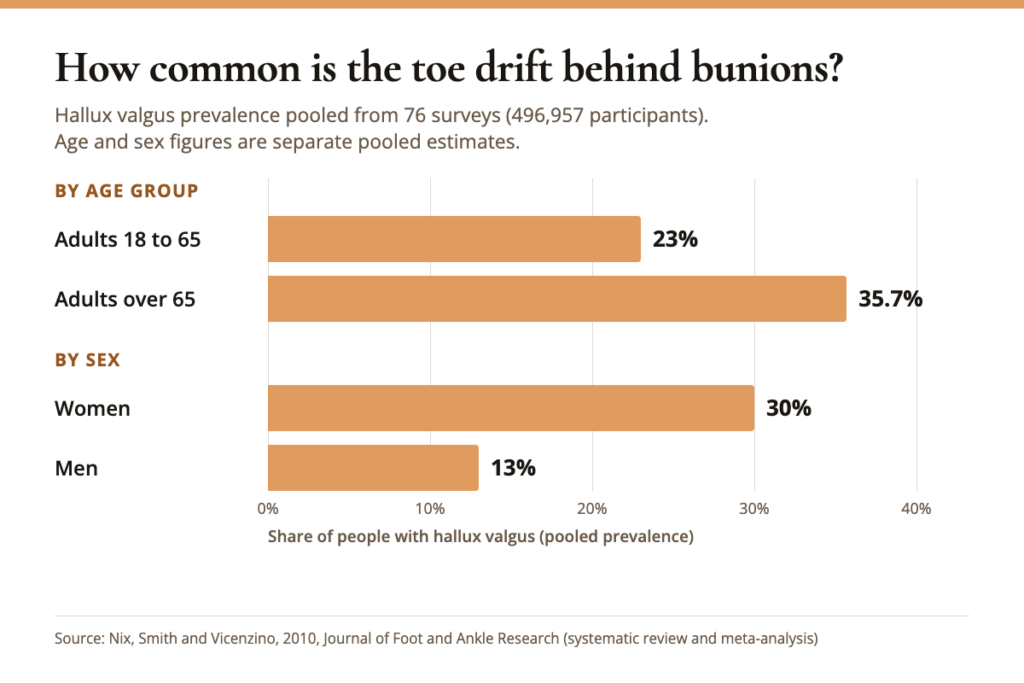
Bunions are also very common. A large review of 76 surveys covering nearly half a million people found hallux valgus, the medical name for the big toe drift behind a bunion, in about 23% of adults between 18 and 65 and in about 36% of adults over 65. The same review found it in 30% of women compared with 13% of men. Family history plays a big part as well: up to 70% of people who develop bunions have relatives who had them, so if your mother or grandmother had bunions, yours may not be a surprise.
Bunions can still cause real trouble. Orthopedic guidance notes that the deformity often gets worse over time and can make shoes and walking painful, and the American Podiatric Medical Association (APMA) says early treatment may stop or slow that progression.
What Should You Try Before Considering Surgery?
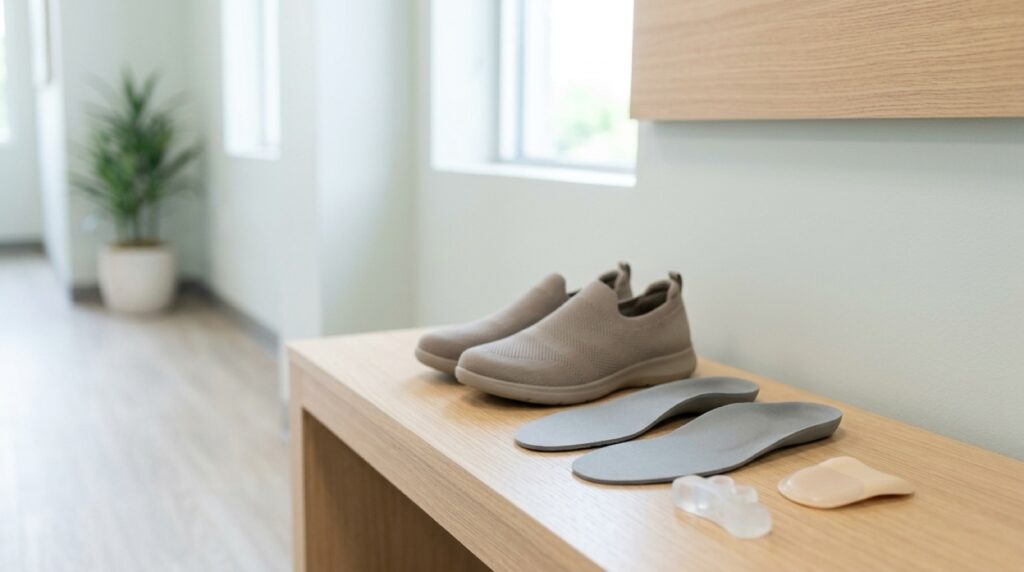
Start with the steps that take pressure off the joint, because nonsurgical treatment can reduce pain and keep a bunion from getting worse, even though it can’t reverse the bump. These are the conservative options described by AAOS and APMA:
| Conservative step | What it does | Worth knowing |
|---|---|---|
| Shoes with a wide or open toe box | Stops squeezing the big toe joint | Avoid tight, pointed shoes and heels higher than a couple of inches (AAOS) |
| Bunion pads | Cushion the bump inside the shoe | Test a pad briefly first, since a bulky pad can add pressure (AAOS) |
| Orthotics (over-the-counter or custom) | Take pressure off the bunion and control foot function | May reduce symptoms and help prevent worsening (APMA) |
| Toe spacers and night splints | Hold the big toe in a straighter position | Splints have not been shown to permanently fix bunions (AAOS) |
| Anti-inflammatory medicine | Eases pain and swelling | Anti-inflammatory drugs and cortisone injections are among podiatrist options (APMA) |
| Padding, taping, physical therapy | Relieve acute pain and inflammation | Padding and taping are “often the first step” (APMA) |
At Foot Center of the RGV, custom orthotics are made from molds of your feet after a biomechanical evaluation, so they’re designed around your foot’s specific mechanics. If you’d like a refresher on what causes bunions and how to slow them down, our post on bunion causes, symptoms, and treatments covers the basics.
Give these steps a fair trial, and let a podiatrist help you judge whether the plan has had enough time to work.
What Are the Signs It May Be Time for a Surgical Evaluation?
It may be time for a surgical evaluation when bunion pain limits your everyday activities and changes in shoes and medication haven’t brought relief. The academy describes these patterns in people who are commonly good candidates for bunion surgery:
- Pain that limits your day. Walking or wearing reasonable shoes becomes hard, to the point that some people struggle to walk more than a few blocks, even in athletic shoes, without significant pain.
- Swelling that won’t settle. The big toe joint stays inflamed and swollen even with rest and anti-inflammatory medicine.
- A toe that keeps changing shape. The big toe continues to drift toward the smaller toes, to the point where the toes may cross.
- Stiffness. You can’t bend and straighten the big toe the way you used to.
- Conservative care has stopped working. Better shoes and over-the-counter pain relievers no longer bring relief.
Watch the second toe, too. In severe bunions, pressure from the big toe can push the second toe out of line, which can lead to hammertoe deformities and painful calluses where the toes rub. Bunions and hammertoes often travel together, and our post on how hammertoes and bunions are related explains the connection. Foot Center of the RGV also offers hammer toe surgery when a bent toe has become rigid and painful.
Any of these signs is worth a conversation with a podiatrist who can examine the foot and look at the bones on an X-ray. The decision itself comes after that exam.
What Doesn’t Count as a Reason for Bunion Surgery?
A bunion that doesn’t hurt isn’t a reason for surgery, and neither is the way your foot looks, according to AAOS. Four points from the academy’s bunion surgery guidance are worth spelling out:
- No pain, no surgery. If your bunion is not painful, you do not need surgery.
- Preventing future growth isn’t enough. Bunions often get bigger over time, but doctors do not recommend surgery just to keep a bunion from getting worse.
- Cosmetic reasons don’t qualify. Bunion surgery should not be done for cosmetic reasons, partly because ongoing pain can develop after surgery in a toe that wasn’t painful before.
- Smaller or pointed shoes aren’t the goal. Surgery may not let you wear a smaller size or narrow, pointed shoes, and you may need to limit your shoe choices for life.
Footwear stays part of the plan after surgery, too, because going back to tight-fitting shoes can cause a bunion to return.
What Happens at a Bunion Evaluation in McAllen?
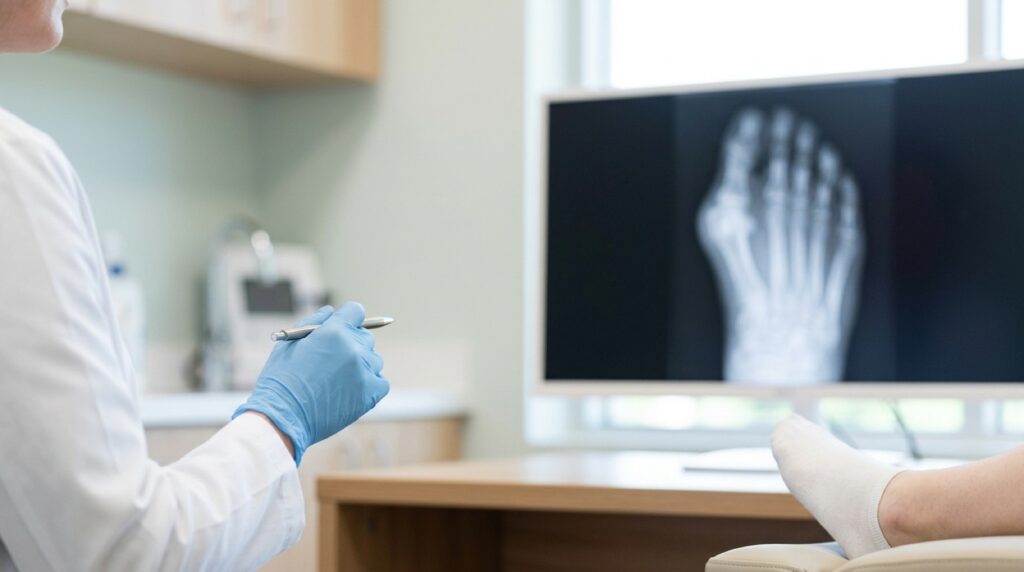
A bunion evaluation combines your history, a physical exam, and an X-ray, according to AAOS, because the X-ray shows what the bump on the outside can’t. The X-ray is taken while you stand, since the bones of the foot line up differently when you bear weight. It shows how far the bones have shifted, whether the big toe joint is damaged, whether arthritis is involved, and how severe the bunion is.
At Foot Center of the RGV, Dr. Quach evaluates each bunion individually, weighing its severity, your lifestyle, your activity level, and your footwear preferences. Our McAllen office has on-site digital X-ray, and Dr. Quach reviews the images with you and explains the findings before discussing treatment options.
If surgery does make sense, the type depends on what the exam and X-ray show. Cleveland Clinic lists four main types of bunion surgery, including osteotomy (cutting and realigning the bone) and joint fusion, which surgeons generally reserve for severe bunions or bunions caused by arthritis. Your overall health is part of the decision as well: people with a heart or lung condition or a chronic illness need medical clearance from their doctor before bunion surgery, according to AAOS.
What Should You Ask Before You Decide?
Ask about the benefits and risks of surgery, the complications that are possible and how likely they are, how pain will be managed, how long your activities will be restricted, and when you’ll be able to drive. Those are the questions the American Academy of Orthopaedic Surgeons suggests bringing to the visit, along with writing the answers down so you can review them later.
It’s also fair to ask which conservative options you haven’t tried yet.
Recovery belongs on that list, because a long recovery is common. Full recovery often takes up to six months, with follow-up visits sometimes needed for up to a year, per AAOS, and Cleveland Clinic notes that bones typically take about 6 to 12 weeks to heal. The length of your recovery depends on the procedure performed and on how closely you follow your surgeon’s instructions afterward, which is why it belongs in the conversation before any date goes on the calendar.
Complications are rare, according to Cleveland Clinic, but the ones it lists include infection, the bunion coming back, and bones that don’t heal together. A good evaluation gives you room to ask about every one of them.
FAQ
Can bunions be corrected without surgery?
No. Nonsurgical treatment cannot reverse a bunion, according to AAOS, but it can relieve pain and help keep the bunion from getting worse. Shoes with a roomy toe box, padding, orthotics, and anti-inflammatory medicine are the usual first steps, and for most people they’re enough.
How long does it take to recover from bunion surgery?
Recovery from bunion surgery usually takes months. The American Academy of Orthopaedic Surgeons says full recovery often takes up to six months and that swelling can last up to a year, while Cleveland Clinic notes that bones usually take about 6 to 12 weeks to heal. Your surgeon will give you a timeline for your specific procedure.
Is it okay to leave a bunion untreated?
A painless bunion can often be watched without treatment, according to orthopedic guidance. Because bunions tend to get larger and more painful over time, APMA recommends seeing a podiatrist when you notice one, since early care may slow its progress.
Is 60 too old for bunion surgery?
Age by itself isn’t one of the academy’s criteria for bunion surgery. Candidates are defined by pain, function, and whether conservative care has failed, and overall health matters, since people with chronic illnesses need medical clearance first. Bunions are also more common with age, found in about 36% of adults over 65 in one large review.
Do I need an X-ray to find out if I need bunion surgery?
Yes, an X-ray is a standard part of the decision. A standing X-ray shows how far the bones are out of alignment, whether there’s arthritis, and how severe the bunion is, which helps determine whether and how it should be corrected.
Not sure whether your bunion is ready for surgery, or just ready for better shoes? Foot Center of the RGV takes a conservative-first approach, and Dr. Quach evaluates each bunion individually, weighing its severity, your lifestyle, your activity level, and your footwear. Learn more about bunion surgery at Foot Center of the RGV, call our McAllen office at (956) 682-4187 or our Weslaco office at (956) 969-1063, or request an appointment online.