A cut or sore on the foot that isn’t healing can become overlooked for some time. You clean it, change the bandage, maybe put some ointment on it, and figure it’ll close up eventually the way most wounds do. For a lot of foot wounds, that’s exactly what happens but, for others, especially in people with diabetes or circulation problems, the wound just doesn’t close by itself. The problems can start when the wound gets infected.
Here’s how to tell the difference between a wound that’s healing on its own timeline and one that needs a specialist involved.
What’s Happening With a Wound That Won’t Heal
Most foot wounds heal the way skin injuries anywhere else on the body do: the area scabs over, new tissue forms underneath, and within a couple of weeks it’s closed. Chronic wounds break that process. The most common reason is diabetes, which interferes with healing in two ways at once — neuropathy means you may not even feel an injury as it’s happening or getting worse, while reduced circulation means less blood flow reaching the area to actually heal it.
Poor circulation from other causes, prolonged pressure on one spot (common for anyone who’s less mobile), and wounds from footwear that goes unnoticed all contribute the same way. Without good blood flow and without feeling the wound worsening, a small injury can sit and deteriorate for weeks before it’s obvious something’s wrong.
What You Can Reasonably Try First
For a minor scrape, blister, or small cut with no other complicating factors, basic home care is a reasonable starting point:
- Keep the wound clean and covered with a fresh bandage daily
- Watch for changes in size, color, or drainage
- Keep pressure and friction off the area as much as possible
- Avoid walking barefoot while it’s healing
This works for wounds without underlying circulation or nerve issues, and for people who don’t have diabetes or a related condition. What it won’t do is heal a wound that has an underlying reason it isn’t closing — no amount of clean bandages fixes reduced blood flow or unaddressed pressure on the area.
Signs It’s Time to See a Specialist
These are the situations where continuing to self-treat at home stops making sense:
The wound hasn’t improved in two to three weeks. Ordinary wounds show visible progress within this window. If yours looks the same, or worse, that’s the clearest sign something is interfering with normal healing.
You have diabetes, poor circulation, or nerve problems in your feet. For anyone in this category, a foot wound is a bigger deal than it looks, and self-treating carries real risk. This is the group that should see a podiatrist early rather than waiting to see what happens.
There’s increasing redness, warmth, swelling, or drainage. These are signs of possible infection, which can spread quickly in a wound that already isn’t healing well on its own.
The wound has a foul odor, or the tissue around it looks dark or discolored. This can indicate dying tissue that needs to be professionally removed before the wound can start healing properly.
The wound is getting bigger instead of smaller. A wound that’s expanding, rather than gradually closing, needs evaluation, not more time.
What Specialist Wound Care Looks Like
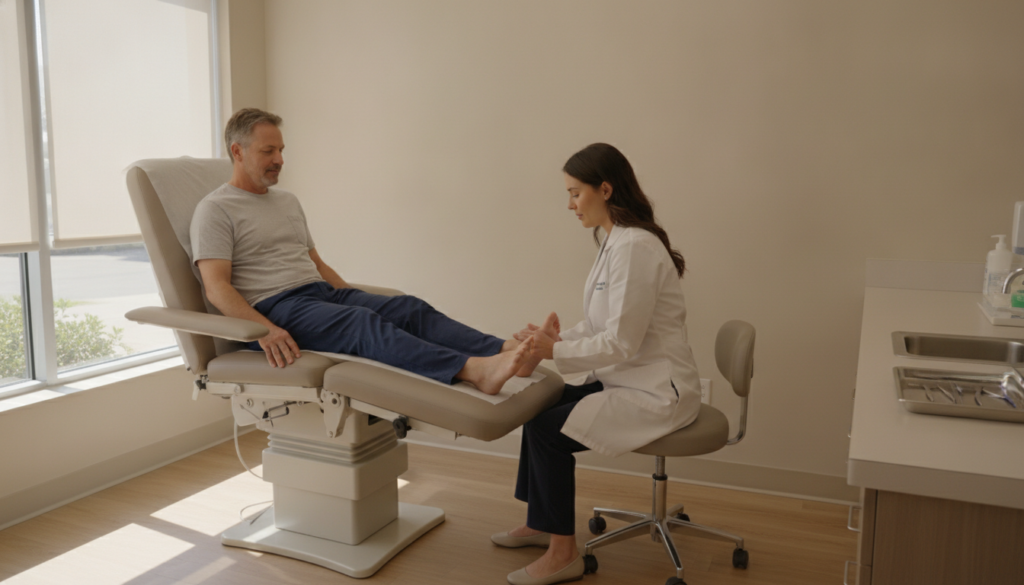
Once a wound needs professional treatment, the goal is to get it closed and prevent it from coming back. At Foot Center of the RGV, that starts with a real assessment of why the wound isn’t healing on its own, not just treating the surface.
Debridement, or removing dead or damaged tissue so healthy tissue can take over, is often the first step. Dr. Quach offers CO2 laser debridement, which removes necrotic tissue with more precision than a traditional scalpel while simultaneously sterilizing the wound bed. That combination means less bleeding, lower infection risk, and generally less discomfort than conventional debridement.
From there, treatment typically includes specialized dressings, offloading strategies to keep pressure off the wound while it heals, and regular follow-up visits to track progress and adjust the plan. Depending on the wound’s size and depth, full closure can take anywhere from a few weeks to several months, but the trajectory should be visibly improving at each visit.
Foot Center of the RGV’s approach is conservative-first at every step. We aim to save the foot and save the toes, aggressive intervention is reserved for wounds that genuinely need it.
What to Do Right Now
If you’re looking at a foot wound that isn’t healing the way you expected, here are a few things to look out for:
- Minor wound, no diabetes or circulation issues, improving steadily? Continue home care and keep watching it.
- Not improving after two to three weeks, or showing signs of infection? Call us.
- Diabetes, poor circulation, or nerve issues in your feet? Get it looked at now rather than waiting to see if it gets worse.
A wound that isn’t healing doesn’t resolve on its own. The earlier a specialist gets involved, the simpler treatment tends to be.
Foot Center of the RGV serves patients in McAllen, Weslaco, and throughout the Rio Grande Valley. Dr. Quach provides comprehensive chronic wound care, including CO2 laser debridement, with a conservative-first approach focused on healing and prevention. Call us at (956) 682-4187 or request an appointment online.