Diabetes is more common in the Rio Grande Valley than almost anywhere else in the country. A recent regional cohort study found diabetes prevalence in the Valley as high as 43.95%, compared with 26.73% nationally over the same period, and in Hidalgo County alone, the share of adults reporting a diabetes diagnosis climbed from roughly 13% in 2013 to about 21% in 2022. If you or someone in your family is managing diabetes here in the Rio Grande Valley, your feet are one of the places that condition shows up first, often quietly. This guide walks through what diabetes does to your feet, the daily habits that catch problems early, the warning signs that mean it is time to call Foot Center of the RGV instead of waiting, and why regular podiatry visits are part of a genuinely preventive diabetes care plan, not an extra step.

Why Do Feet Need Special Attention When You Have Diabetes?
Feet need special attention with diabetes because the disease can damage both the nerves and the blood vessels that keep them healthy, and those two problems compound each other. According to the National Institute of Diabetes and Digestive and Kidney Diseases (NIDDK), diabetes-related nerve damage, called peripheral neuropathy, affects roughly one-third to one-half of people with diabetes, with the likelihood rising the longer someone has had the disease. About 10 to 15% of patients show signs of neuropathy soon after diagnosis, and that climbs to around 50% after ten years. At the same time, diabetes can reduce blood flow to the legs and feet through peripheral artery disease, which slows healing and makes it harder for the body to fight off infection, per the NIH’s clinical reference on diabetic foot ulceration.
Put those two together, and you get the pattern podiatrists see constantly: a small injury, a blister, a cut from a fingernail clipping gone wrong, a rubbed spot from a shoe, that a patient with healthy nerves would feel and treat immediately. With reduced sensation, that same injury can go unnoticed for days, and with reduced blood flow, it heals slower once it is finally caught. Neither problem is something you can feel your way around, which is exactly why routine, scheduled checks matter more than waiting for pain.
What Should You Check on Your Own Feet Every Day?
You should check both feet, every day, for sores, cuts, cracks, blisters, redness, or swelling, using a mirror to see the bottom of your foot if you cannot easily twist to look. This is the standing recommendation from the American Diabetes Association, and it takes less time than most people expect once it becomes routine. Look between your toes as well as across the top and bottom of the foot, since that is a common spot for moisture-related skin breakdown to start unnoticed.
Alongside the daily visual check, the American Diabetes Association recommends washing feet with warm, not hot, water, drying them carefully including between the toes, and moisturizing dry or cracked skin while avoiding the webbing between the toes, where extra moisture invites fungal problems rather than solving dryness. Wearing properly fitted, protective shoes rather than going barefoot, even indoors, is a standard part of that same routine, since a foot with reduced sensation cannot reliably feel a step on something sharp. None of this replaces a clinical exam. It is what happens on the 364 days a year you are not in a podiatrist’s chair, and it is what catches a problem while it is still a problem you can treat at home rather than one that needs a specialist.
What Are the Warning Signs That Need a Podiatrist, Not Home Care?
Certain signs mean it is time to call Foot Center of the RGV rather than continue monitoring at home: numbness or tingling that is new or getting worse, a cut, blister, or sore that has not visibly started healing within a few days, any skin color change on the foot or lower leg, dry cracked skin that is not responding to regular moisturizing, or a foot that feels warmer or looks more swollen than the other one. Any of these can be an early sign that nerve or circulation damage is already affecting how your foot is healing, and diabetic wounds are exactly the kind of issue where waiting a few extra weeks to “see if it clears up” is the most common way a manageable problem becomes a serious one.
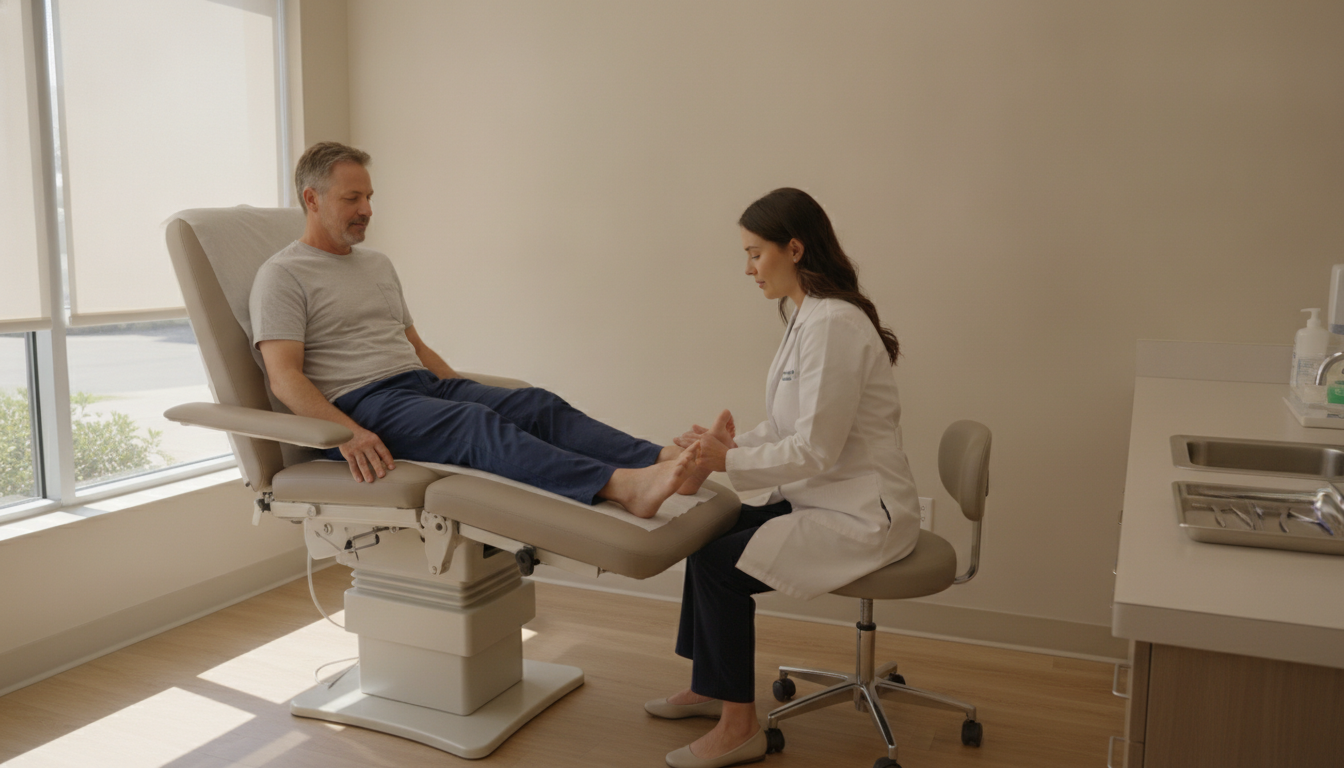
This is also where regular, scheduled visits matter even without a specific symptom. The American Diabetes Association’s Standards of Care recommend a comprehensive foot exam at least once a year for every person with diabetes, and more frequently, sometimes at every visit, for patients who already have reduced sensation, a prior foot ulcer, or a previous amputation. A comprehensive exam includes a skin inspection, a check for foot deformities, and a neurological assessment such as the 10-gram monofilament test, which checks whether you can still feel light pressure in different spots on your foot. That test alone catches neuropathy that a patient often cannot detect on their own, which is the entire point of scheduling it before a problem shows up rather than after.
Why Does Catching a Wound Early Matter So Much?
Catching a diabetic foot wound early matters because diabetic foot ulcers are recognized as the leading pathway to lower-limb amputation in people with diabetes, which is why so much of amputation-prevention research focuses on catching and treating ulcers before they progress. It also matters because healed does not mean finished. Research published in PLOS ONE found diabetic foot ulcer recurrence rates of roughly 40% within one year of healing and about 65% within five years, which is why Foot Center of the RGV treats a healed wound as the start of an ongoing prevention plan rather than the end of the conversation.
The encouraging side of that same research, however, says that more than half of diabetic foot ulcers are considered preventable through routine foot care, patient education, and catching problems early, according to a meta-analysis of patient-education programs published through the National Library of Medicine. Coordinated care that combines regular podiatry visits with good at-home habits has also been associated with a meaningfully lower risk of any lower-extremity amputation compared with less structured care. None of that is a guarantee for any individual patient, but it is the clearest evidence available that the daily checks and the annual exam are not just precautions. They are the intervention.
Diabetes and foot complication risk at a glance
| Metric | Figure |
| Diabetes prevalence, Rio Grande Valley cohort study | 43.95% (vs. 26.73% nationally) |
| Hidalgo County adults reporting a diabetes diagnosis, 2013 to 2022 | ~13% to ~21% |
| People with diabetes who develop peripheral neuropathy | 1/3 to 1/2 (10-15% soon after diagnosis, ~50% after 10 years) |
| Diabetic foot ulcer recurrence within 1 year of healing | ~40% |
| Diabetic foot ulcer recurrence within 5 years of healing | ~65% |
| Diabetic foot ulcers considered preventable through routine care and education | More than half |
How Foot Center of the RGV Supports Diabetic Patients in the Rio Grande Valley
If you are managing diabetes anywhere in the Rio Grande Valley, where diagnosed diabetes runs well above the national rate, a standing relationship with a podiatrist should be part of your care team the same way your primary care physician and your eye doctor are. Foot Center of the RGV offers comprehensive diabetic foot exams, wound care, and coordination with your broader diabetes care team at both the McAllen office, open Monday through Friday, and the Weslaco office, open Monday, Tuesday, and Thursday. Dr. Quach’s approach is conservative first: the goal at every visit is to catch small problems while they are still small, protect circulation and sensation for as long as possible, and step in with more advanced wound care only when it is genuinely needed. If it has been more than a year since your last foot exam, or if you have noticed any of the warning signs above, schedule a visit with Foot Center of the RGV before a manageable issue turns into an emergency room visit.
FAQ
What are the warning signs that need a podiatrist right away?
Call Foot Center of the RGV rather than continuing to monitor at home if you notice numbness or tingling that’s new or getting worse, a cut, blister, or sore that hasn’t visibly started healing within a few days, any skin color change on the foot or lower leg, dry cracked skin that isn’t responding to regular moisturizing, or a foot that feels warmer or looks more swollen than the other one.
What type of foot doctor should someone with diabetes see?
A podiatrist experienced in diabetic foot care, like Dr. Quach at Foot Center of the RGV. The American Diabetes Association’s Standards of Care recommend a comprehensive foot exam, including a skin inspection, a deformity check, and a neurological test, at least once a year for every person with diabetes, and more often for patients with reduced sensation or a prior ulcer.
Does insurance cover diabetic foot care?
Coverage varies by plan, so it’s worth calling Foot Center of the RGV’s McAllen or Weslaco office directly to verify your benefits before your visit.
How often should someone with diabetes get a foot exam?
At least once a year, per the American Diabetes Association’s Standards of Care. Patients who already have reduced sensation, a prior foot ulcer, or a previous amputation should be examined more frequently, sometimes at every visit.