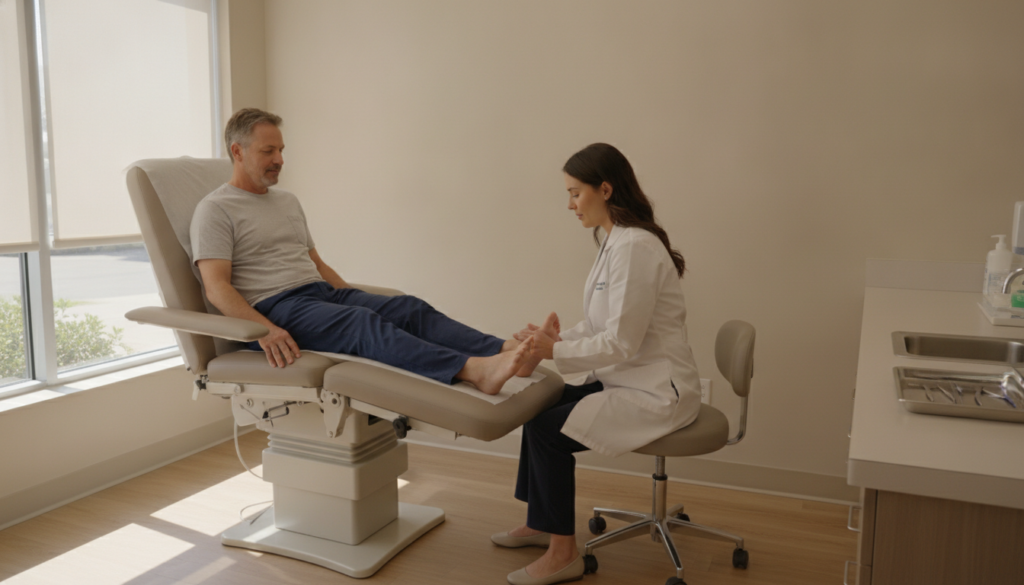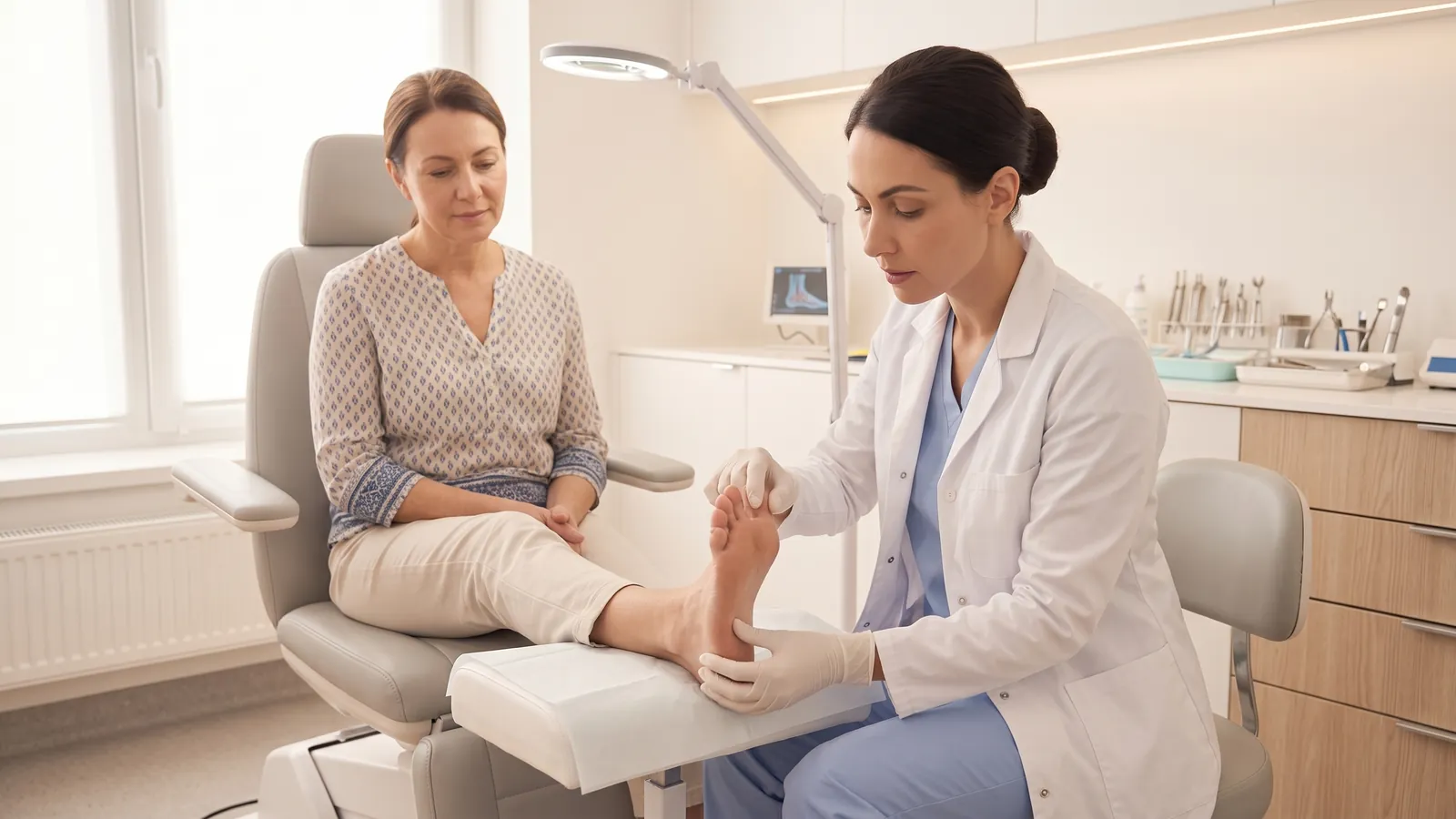
If you’ve been told you have a plantar wart, or you’ve been walking around with a painful spot on the bottom of your foot for a while now, you’re probably past the point of wondering whether it’s serious and into the part where you just want it gone. The hard truth is that plantar warts don’t get better on their own timeline that most people are willing to wait out, and standing or walking on one every day gets old fast.
Here’s what happens once you decide to treat it, what recovery looks like, and what you need to know about cost before you book.
What You’re Dealing With
Plantar warts are caused by HPV entering the skin through tiny breaks on the sole of the foot, usually picked up in warm, damp environments like pool decks, gym locker rooms, or shared showers. Because they form on weight-bearing parts of the foot, they get pushed inward as you walk, which is why they’re often more painful than warts anywhere else on the body.
They’re identifiable by a few consistent signs: a rough, callused-looking growth on the sole, small black dots inside it (clotted blood vessels, not dirt), and pain when you press on it or stand for long periods. Left untreated, they can multiply into clusters, called mosaic warts, which are harder to treat than a single isolated one.
Treatment Options, From Conservative to Laser
Foot Center of the RGV takes a conservative-first approach, which means the goal is always to resolve the wart with the least invasive method that will work first.
Topical medications (like salicylic acid preparations) are often the first line of treatment for smaller, less established warts. They work gradually, breaking down the wart tissue over several applications.
Cryotherapy (freezing the wart) is another conservative option, typically requiring multiple sessions spaced a few weeks apart.
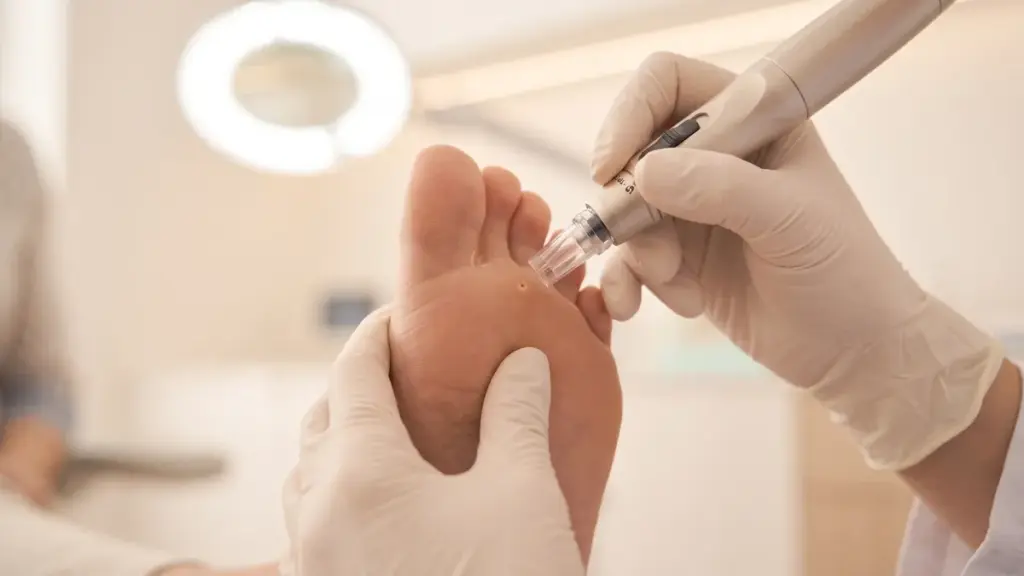
CO2 laser removal is reserved for warts that haven’t responded to conservative treatment, or for patients who want a faster resolution. The laser vaporizes the wart tissue directly, targeting the affected area with a level of precision that minimizes damage to the healthy skin around it.
Foot Center of the RGV is one of the few podiatry practices in the Rio Grande Valley offering this option.
Dr. Quach will typically start with the least invasive option that makes sense for your case, and escalate only if it’s needed, not the other way around.
What the CO2 Laser Procedure Actually Involves
If conservative treatment hasn’t worked, or the wart is large, painful, or part of a cluster, here’s what the laser visit looks like:
- The treatment area is numbed with local anesthesia, this is the only uncomfortable part of the visit
- Dr. Quach uses the CO2 laser to vaporize the wart tissue, layer by layer, until it’s fully removed
- The laser cauterizes as it works, which means minimal bleeding and a sterilized treatment site
- A bandage is applied, and you can walk out of the office the same day
Most warts are fully resolved in a single laser session, though larger or deeply embedded warts occasionally need a second treatment.
Recovery: What to Expect After Treatment
Recovery from CO2 laser wart removal is generally straightforward. Expect mild tenderness at the treatment site for about 3–7 days, similar to a minor scrape. You’ll be able to walk on it right away, though comfortable, closed-toe shoes make the first few days easier than sandals or anything that puts direct pressure on the area.
Full healing of the treated site typically takes 2–4 weeks. Dr. Quach will schedule a follow-up visit to confirm the wart is fully gone, since deeply rooted warts can occasionally require a touch-up session.
Conservative treatments (topical or cryotherapy) have an easier recovery day-to-day, but usually take longer overall since they rely on multiple sessions spread out over weeks or months.
Is Plantar Wart Removal Covered by Insurance?
In most cases, yes. Because plantar warts are a diagnosed medical condition, not a cosmetic concern, treatment is typically covered under most insurance plans, including Medicare, once it’s evaluated and diagnosed by a podiatrist.
Coverage details, like copays and whether laser treatment specifically is covered versus conservative options, vary by plan. Our front office can verify your specific benefits before you schedule, so there aren’t any surprises.
If you’re self-pay or your plan has limited coverage, ask about pricing during your visit. Conservative treatments are generally the lower-cost starting point, with laser reserved for cases where it’s the more effective option anyway.
Choosing the Right Treatment for You
There’s no single right answer for every patient. A small, newly noticed wart usually starts with topical treatment or cryotherapy. A wart that’s been resistant to over-the-counter products for months, is significantly painful, or has multiplied into a cluster is a stronger candidate for laser removal from the start.
Dr. Quach will look at the size, location, and history of the wart, along with what’s realistic for your schedule and how quickly you need it resolved, before recommending a path forward.
Foot Center of the RGV serves patients in McAllen, Weslaco, and throughout the Rio Grande Valley. Dr. Quach offers both conservative and CO2 laser treatment for plantar warts, with a conservative-first approach at every visit. Call us at (956) 682-4187 or request an appointment online.