
That yellow, thickening nail didn’t happen overnight, and it’s not going away on its own either. Toenail fungus is one of those problems people try to wait out, or fix with a drugstore cream, for months (sometimes years) before asking a doctor about it. Some of that hesitation makes sense: it’s usually not painful early on, and there’s no shortage of home remedies promising a fix.
The truth tends to be more mixed. Some mild cases do respond to home care, others need real treatment, and dragging your feet only gives the infection more time to spread to other nails.
Here’s how to tell which situation you’re in.
What’s Really Happening Under the Nail
Toenail fungus (onychomycosis) is a fungal infection that gets into the nail bed, usually through a small crack in the nail or the surrounding skin. Once it’s in, it feeds on keratin, the protein that makes up the nail, which is why the nail changes color, thickens, and starts to crumble or separate from the nail bed over time.
A few things make the Rio Grande Valley a particularly easy place to pick it up:
- Heat and humidity — fungus thrives in warm, damp conditions, and South Texas delivers both most of the year
- Closed-toe shoes and sweat — trapped moisture inside shoes and boots creates the exact environment fungus needs
- Shared wet surfaces — pool decks, gym showers, and locker rooms are common exposure points
- Nail trauma or a prior fungal infection elsewhere on the foot (like athlete’s foot) — both make nails more vulnerable
Once fungus is established, it doesn’t clear up the way a skin infection might. Nails grow slowly, and the fungus keeps re-infecting the nail as it grows out, which is exactly why it’s so persistent.
What You Can Reasonably Try First
If you’ve just noticed a small area of discoloration and nothing else looks off, mild cases can sometimes respond to consistent home care:
- Over-the-counter antifungal nail creams or lacquers, used daily and consistently
- Keeping feet clean and completely dry, especially between the toes
- Changing socks daily and choosing breathable shoes
- Disinfecting shoes, nail clippers, and shower floors regularly
This approach can work for very early, limited infections. What it won’t do is reverse a nail that’s already thickened, discolored across most of its surface, or lifting away from the nail bed. Over-the-counter products struggle to penetrate deep enough into the nail to reach a well-established infection.
Signs It’s Time to See a Podiatrist
These are the situations where home treatment stops being realistic:
The nail covers more than a small corner with discoloration. Once fungus has spread across most of the nail, topical over-the-counter products rarely reach far enough to clear it.
The nail is thickening, crumbling, or lifting from the nail bed. This is a sign the infection has taken hold structurally, not just cosmetically, and it won’t reverse with cream alone.
You have diabetes, poor circulation, or nerve problems in your feet. For anyone in this category, a fungal nail infection is a bigger deal than it looks. It can create an entry point for bacterial infection, and healing is slower. See a doctor rather than self-treating.
You’ve been treating it at home for 8+ weeks with no improvement. If the nail looks the same or worse after two months of consistent care, it’s time for something stronger than what’s on the store shelf.
It’s spreading to other nails or your skin. Fungus doesn’t stay put. The longer it’s active, the more nails and skin it’s likely to reach.
What Treatment Looks Like
For confirmed toenail fungus, Dr. Quach has a few tools available depending on how advanced the infection is.
Prescription topical or oral antifungal medication is often the first step for moderate infections. Oral antifungals in particular have a much higher success rate than anything sold over the counter, because they treat the infection from the inside as the nail grows out.
Debridement, the thinning or trimming the infected portion of the nail, is often done alongside medication to reduce fungal load and help the treatment reach deeper into the nail.
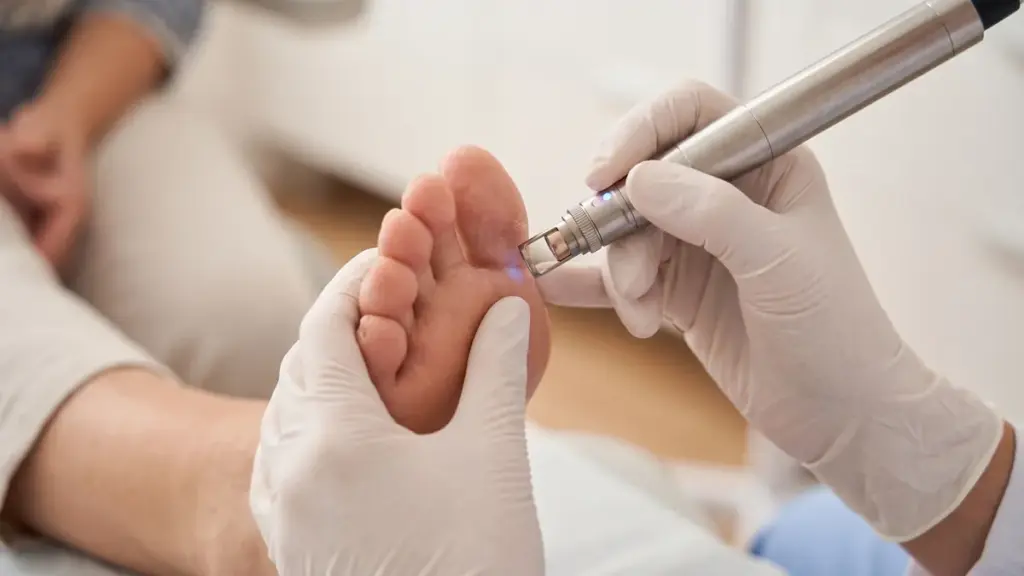
For stubborn or recurring infections, CO2 laser treatment is available at Foot Center of the RGV. The laser targets and heats the fungal cells within the nail bed without the systemic side effects that can come with oral medication, and it’s especially useful for patients who can’t take oral antifungals for other health reasons. Foot Center of the RGV is the only practice in the Valley offering this laser option for nail fungus.
There isn’t a single “best” treatment for every case. Dr. Quach evaluates the extent of the infection, your health history, and how the nail has responded to anything you’ve already tried, then recommends the option that fits.
What to Do Right Now
If you’re looking at a discolored toenail right now, here’s the short version:
- Small spot, caught early? Try consistent topical treatment and give it a few weeks.
- Covering most of the nail, thickening, or spreading? Call us.
- Diabetes or circulation issues? Skip the home remedies and get it looked at.
Toenail fungus doesn’t resolve on its own, and the longer it sits, the more nails it tends to involve.
Foot Center of the RGV serves patients in McAllen, Weslaco, and throughout the Rio Grande Valley. Dr. Quach offers both traditional and CO2 laser treatment for toenail fungus, tailored to how advanced the infection is. Call us at (956) 682-4187 or request an appointment online.